
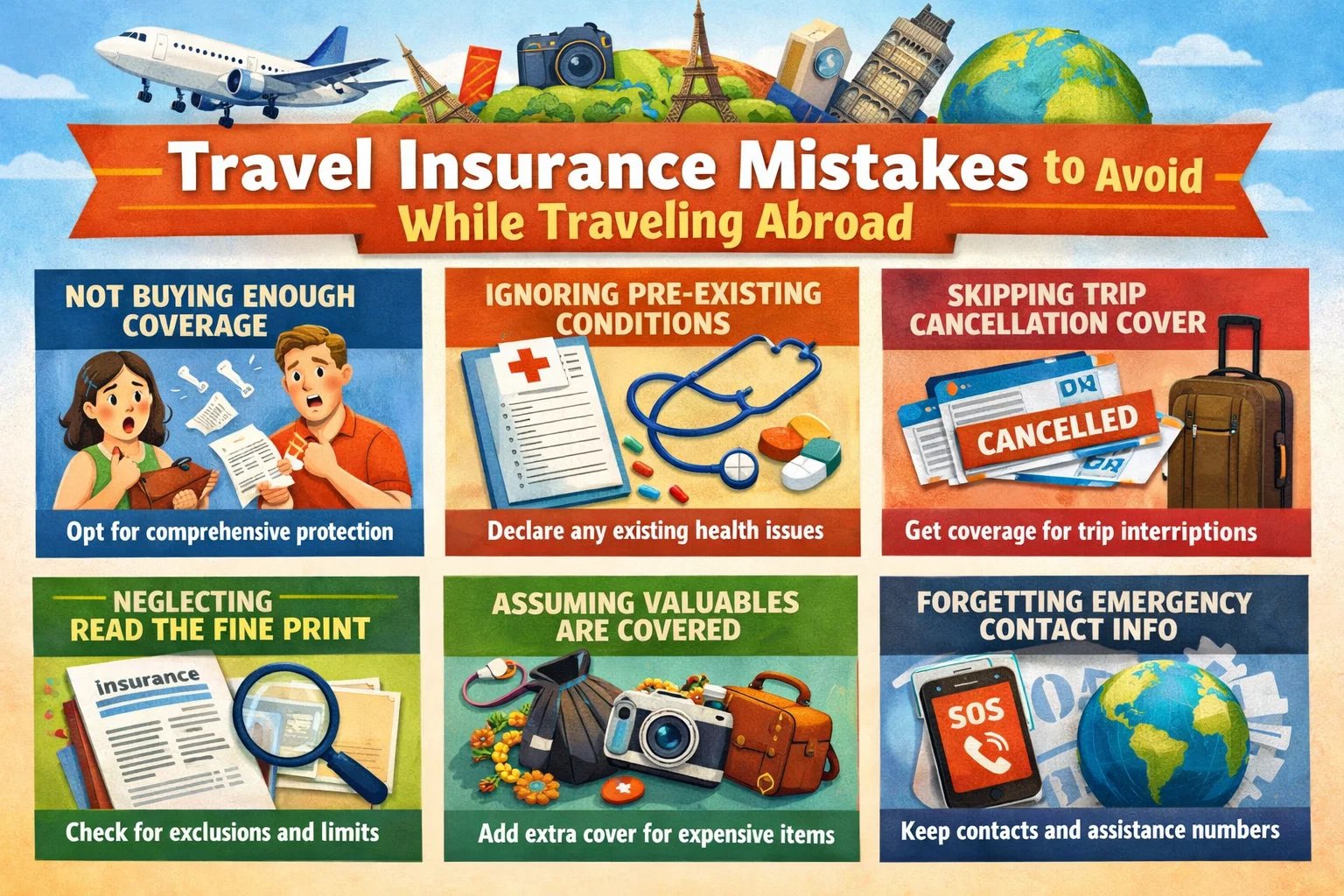
Traveling abroad is an exciting experience—whether for leisure, business, education, or adventure. However, many travelers unknowingly make critical travel insurance mistakes that can result in claim rejections, financial losses, and stressful emergencies. This risk is even higher in Tier-1 countries like the United States, United Kingdom, Canada, Australia, and Europe, where healthcare and emergency costs are extremely expensive.
Travel insurance is designed to protect you financially and medically—but only if it is chosen and used correctly. Below are the most common travel insurance mistakes and how to avoid them.
Why Travel Insurance Mistakes Can Be Very Expensive
Medical treatment abroad can cost thousands of dollars per day. Even a minor hospital visit in the USA or Canada may exceed the total cost of your trip. Without proper insurance coverage, travelers often pay these expenses out of pocket.
1. Buying Travel Insurance Too Late
Purchasing insurance at the last minute—or after unexpected events occur—can remove important protections like trip cancellation or pre-departure coverage.
- No coverage for trip cancellation
- Pre-existing conditions may be excluded
- No protection for unexpected events before travel
Best practice: Buy travel insurance immediately after booking your trip.
2. Choosing the Cheapest Policy Only
Low-cost policies often come with low coverage limits and major exclusions.
- Insufficient medical coverage
- No emergency evacuation protection
- Limited baggage or delay coverage
- Higher claim rejection probability
3. Ignoring Medical Coverage Limits
| Destination | Recommended Coverage |
|---|---|
| USA & Canada | USD 250,000 – 500,000 |
| Europe (Schengen) | EUR 50,000 – 100,000 |
| UK & Australia | USD 150,000+ |
Choosing minimum visa-only coverage is a major financial risk.
4. Not Declaring Pre-Existing Conditions
Failure to disclose medical history is one of the top reasons insurance claims are rejected.
- Diabetes
- High blood pressure
- Asthma
- Heart disease
- Past surgeries
Always disclose medical history honestly.
5. Assuming Adventure Activities Are Covered
Standard policies usually exclude high-risk activities such as:
- Scuba diving
- Skiing or snowboarding
- Paragliding
- High-altitude trekking
Purchase an adventure sports add-on if needed.
6. Ignoring Policy Exclusions
Common exclusions include:
- Alcohol or drug-related incidents
- Self-inflicted injuries
- War or civil unrest
- Unapproved treatments
7. Not Following Claim Procedures
Missing documents or late reporting can invalidate claims.
- Medical reports and bills
- Police reports for theft
- Airline delay confirmation
- Original receipts
8. Buying the Wrong Policy Duration
Ensure the policy covers your full trip length—including extensions.
9. Ignoring Insurance for Business Travel
Standard plans may not cover work-related risks, equipment loss, or liability. Business travelers should consider specialized policies.
10. Relying Only on Visa Insurance
Visa-minimum insurance often provides insufficient real-world protection. Choose coverage based on actual travel risk—not just visa approval.
How to Avoid Travel Insurance Mistakes
- Compare reputable global insurers
- Choose high medical coverage
- Read policy wording carefully
- Declare medical history honestly
- Add relevant riders
High-Value Add-Ons to Consider
- Pre-existing disease coverage
- Cancel-for-any-reason (CFAR)
- Adventure sports protection
- Higher evacuation limits
- Worldwide coverage including USA & Canada
Final Thoughts
Travel insurance mistakes can cost far more than the premium itself. By understanding coverage, exclusions, and claim requirements, you can travel internationally with confidence and financial security.
Smart travel insurance planning protects your health, savings, and peace of mind—making every journey safer and stress-free.