
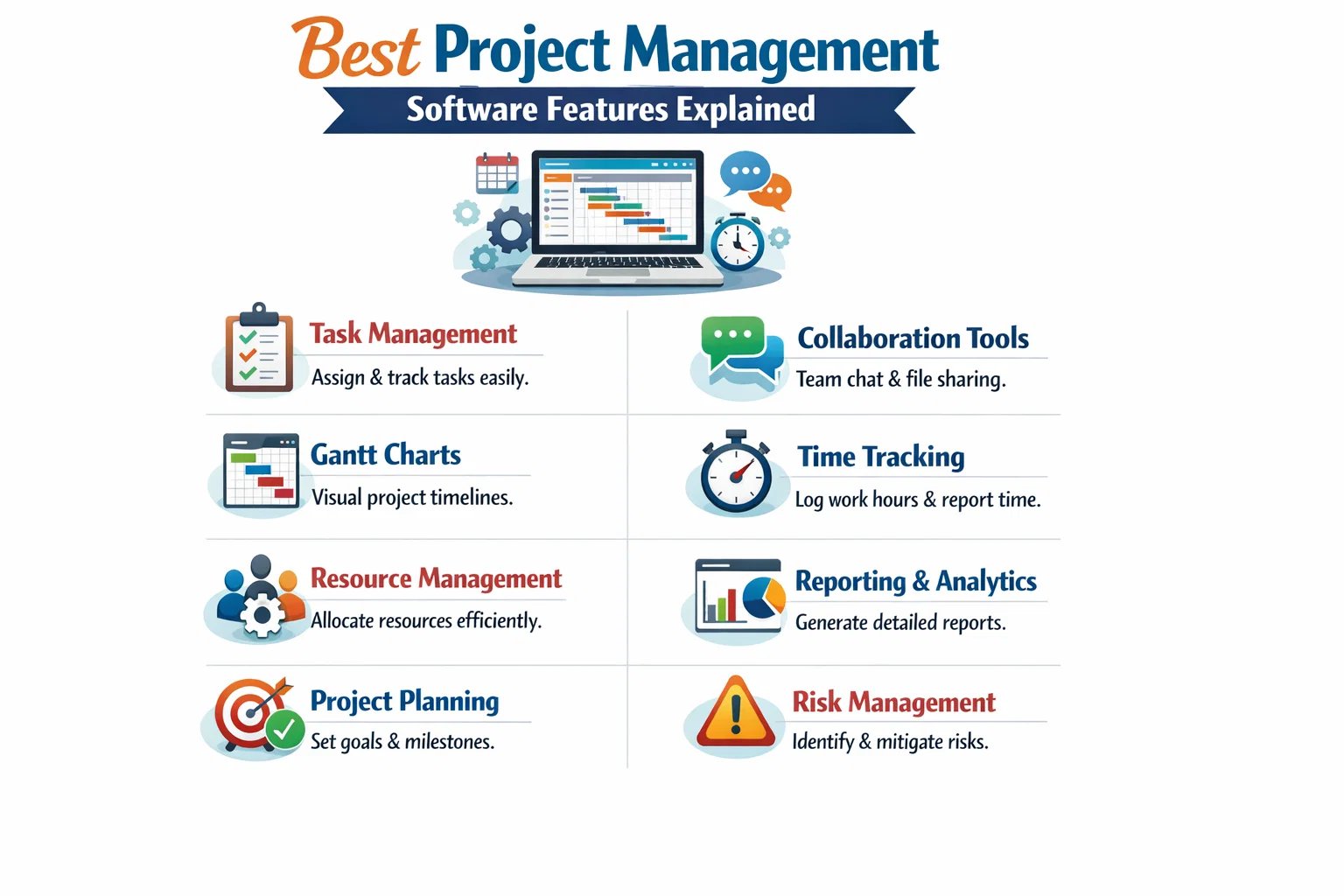
In an era where efficiency, transparency, and speed define business success, project management software has become a cornerstone for organizations worldwide. Especially in Tier-1 countries like the United States, United Kingdom, Canada, and Australia, companies rely heavily on advanced project management tools to handle complex workflows, distributed teams, and high-value projects.
This comprehensive guide explains the best project management software features, why they matter, and how they help businesses deliver projects faster, smarter, and more profitably.
Why Project Management Software Features Matter
Not all project management tools are created equal. The features built into the software determine how effectively teams can plan, collaborate, and execute work.
- Improve team productivity
- Increase visibility and accountability
- Reduce project delays and cost overruns
- Support remote and hybrid teams
- Enable data-driven decision-making
Choosing the right features is especially critical for businesses operating in competitive Tier-1 markets.
Core Features of Project Management Software
1. Task and Subtask Management
Task management is the foundation of any project management tool. It allows teams to break large projects into smaller, manageable tasks and subtasks.
- Task creation and assignment
- Due dates and priorities
- Dependencies between tasks
- Status tracking such as to-do, in progress, and completed
This structure ensures accountability and keeps projects moving forward efficiently.
2. Visual Project Planning Tools
| Feature | Purpose | Business Value |
|---|---|---|
| Gantt Charts | Timeline visualization | Improved planning and forecasting |
| Kanban Boards | Workflow visualization | Better task flow and efficiency |
| Calendars | Schedule tracking | Reduced missed deadlines |
Visual tools give teams a clear overview of progress, dependencies, and scheduling.
3. Team Collaboration and Communication
Modern project management software replaces scattered emails and chats with centralized communication.
- Task comments and mentions
- File sharing and version control
- Real-time notifications
- Activity logs
This ensures alignment across distributed teams regardless of location or time zone.
4. Resource and Workload Management
Resource management helps leaders allocate people, time, and budgets efficiently. Workload views allow managers to identify overutilized or underutilized team members and balance responsibilities effectively.
This feature is particularly valuable for agencies, consulting firms, and enterprise organizations.
5. Time Tracking and Productivity Monitoring
Time tracking is a high-value capability in Tier-1 markets, especially for billing, payroll, and performance measurement.
- Track hours spent on tasks
- Improve cost estimation accuracy
- Increase project profitability
Accurate tracking leads to stronger financial control and transparency.
6. Reporting and Analytics
Advanced reporting converts raw project data into actionable insights that guide strategic decisions.
- Project progress reports
- Budget and cost analysis
- Team performance metrics
- Risk and bottleneck identification
These insights empower leadership to optimize performance and reduce uncertainty.
7. Automation and Workflow Rules
Automation is one of the most powerful modern project management features. Automated workflows can:
- Update task statuses automatically
- Send reminders and alerts
- Assign tasks based on predefined rules
This reduces manual effort while improving operational consistency.
8. Integrations with Business Tools
Top platforms integrate with essential business systems such as:
- CRM software
- Accounting and finance tools
- Communication platforms
- Cloud storage services
Integrations create a unified digital ecosystem that enhances productivity and data accuracy.
9. Security and Access Control
Security is a top concern, particularly for enterprises operating in regulated Tier-1 markets.
- Role-based access control
- Data encryption
- Audit logs
- Regulatory compliance support
These protections safeguard sensitive project and client information.
10. Support for Agile and Hybrid Methodologies
Modern teams often combine Agile, Scrum, Kanban, and traditional project management approaches. Advanced software supports:
- Sprint planning and backlog management
- Velocity and performance tracking
- Flexible workflow customization
This adaptability allows organizations across industries to operate efficiently.
Enterprise-Grade Features for Large Organizations
Enterprise project management platforms extend beyond core functionality with capabilities such as:
- Portfolio and program management
- Advanced analytics dashboards
- Custom workflow automation
- Scalability across departments and regions
These features enable large organizations to manage hundreds of concurrent projects effectively.
How the Right Features Improve Business ROI
When implemented correctly, project management software features directly influence measurable business outcomes:
- Faster project delivery
- Lower operational costs
- Higher client satisfaction
- Improved employee productivity
This makes project management software a high-ROI investment for modern organizations.
Future Trends in Project Management Software Features
The future of project management is driven by innovation and intelligent automation. Emerging capabilities include:
- AI-powered project insights
- Predictive risk management
- Advanced workflow automation
- Smarter resource forecasting
These advancements will further transform how teams plan and execute complex initiatives.
Final Thoughts
The best project management software features extend far beyond simple task tracking. They empower teams to collaborate effectively, make smarter decisions, and deliver projects with confidence and consistency.
For businesses in Tier-1 countries aiming to remain competitive, investing in feature-rich project management software is not just beneficial—it is essential for long-term growth and operational excellence.